How often do you hear people say, “That’s just the way I am”? You hear it at work, and you hear it at home. But is it actually a good thing? Just last week, I heard both a client and a professional contact use this phrase—the latter in reference to her partner.
This conviction can bring a great sense of relief, but it can just as easily create additional tension or even lead to destructive outcomes—whether in a professional team or at home with loved ones. So, what is the best way to handle it? Let’s take a look.
The positive aspect is that it can be a form of self-acceptance. When you say it to yourself or others—and truly accept your shortcomings, your "shadow" sides, and your unpleasant habits—you are acknowledging that they exist, and that’s okay; they are simply part of the picture. There is something wonderful about allowing these traits to exist fully, without the pressure to change anything about yourself. “That’s just the way I am.” Imagine that: complete, unconditional self-acceptance. Just writing it down makes me feel a sense of relief.
Self-compassion and self-forgiveness are beautiful spiritual values to live by—concepts we see, for instance, in Buddhism. Yet, all too often, people are far too hard on themselves. During my training in the United States, Hal Stone—the co-founder of the “Psychology of Selves & Voice Dialogue”—explained that the “inner critic” is particularly strong within the Dutch psyche, a trait likely rooted in our cultural and historical connection to Calvinism. But this isn’t unique to the Dutch; it is an “ego-passenger” that resides within all of us. It acts as a conscience that keeps you sharp, ensuring you remain open to feedback and capable of visibly learning from it. But in many cases—such as with ‘imposter syndrome’—it’s constantly on your back, cutting you down with negative self-criticism. This unnecessarily amplifies your insecurity and chips away at your self-confidence.
In such instances, self-compassion acts as a balm for your soul; it is far better to offer yourself a kiss than a rap on the Head.
“Better a kiss than a rap on the head”
But is it infinitely good?
And doesn’t self-compassion sometimes come at the expense of compassion for others—for those around us—as we see emphasized in Christianity, Judaism, and Islam?
The ugly aspect of identifying with the notion that "this is just who I am" is that it can polarize interactions with others and even lead to destructive or dangerous behavior. One of my clients mentioned that their organization was undergoing a restructuring, requiring new competencies. Beyond simply maintaining technical proficiency in one’s role, there was now a need for effective collaboration with colleagues. One team member, who had been with the company for 30 years, felt he had long since proven his worth and that no one had any business telling him how to do his job—after all, he knew the ropes better than anyone.
When asked to learn back-office tasks as well, he resisted. Having spent years exclusively in front-office roles—tasks he believed he performed well—he dug in his heels, despite the fact that some of his colleagues saw things differently. When the general manager urged him to learn the back-office functions (to ensure operational continuity during colleagues' absences), he gave the middle finger and declared, "I’m not doing this, and I can’t change—this is just who I am." His resistance created a hostile atmosphere within the team; his surly glares and cynical remarks made the environment less psychologically safe for others to open up or share their thoughts.
Another client shared that she had always cared for her partner by adopting a nurturing, maternal role. She carried this same dynamic into her workplace, which drained a tremendous amount of her energy—eventually leading to burnout and forcing her to take time off work. When she asked her son and husband to clean up their own messes, coordinate the use of the shared car themselves, and take on other responsibilities, they resisted. She was met with accusations and expressions of anger. She then asked her partner, in a friendly manner, if he would be willing to change this, to which he replied, “No, this is just the way I am…” Her response was: “In that case, perhaps I should pack my bags.”
The danger of strongly identifying with the "this is just who I am" mindset is that you are, in effect, writing your own spiritual epitaph. You have carved your identity in stone, anchored by the rigid conviction that you no longer need to evolve or change—even though change is one of the few certainties in life. Rivers, trees, the alignment of the stars—everything changes, constantly. Are we, as human beings, any different? Do we always remain exactly the same?
Of course not. Your body is in a constant state of flux, as are your mental state and your personal and professional development. You are never truly the same person from one moment to the next, because change is a constant.
People only resist change and natural growth when it threatens their own ego-driven interests—such as their desire for comfort, privilege, power, wealth, or fame. And that is precisely what occurred in both of the cases mentioned.
This "this is just who I am" identity becomes a blank check, allowing you to act in whatever way suits you best, even when it comes at the expense of others. You close yourself off to the kind of constructive criticism that could actually foster your growth and development as a human being. You might say "yes," but your actions say "no." You create greater polarization between yourself and others. Where, then, is the compassion for those around you?
Use it
When and how can the "that’s just the way I am" identity be helpful? It can be useful when you feel that you’re never doing well enough yourself. Use this perspective to counter excessive negative self-criticism—accept that things don’t have to be perfect and that making mistakes is a way to learn. Remind yourself that you are a work in progress—like a river, constantly flowing—and that it is perfectly okay to be exactly where you are right now.
Let it go
If you frequently receive valid, well-founded criticism from various people, it’s time to let go of that defensive identity. Be open to hearing constructive feedback; use it to grow into a better, more pleasant person—both for yourself and for those around you.
If you are unable or unwilling to do so, that is also your prerogative. In that case, however, choose to step away from relationships or situations that no longer align with who you are. This allows you to be yourself without becoming a burden to others.
What if someone keeps saying it?
Confront the person with the impact of this statement. Explain how their behavior affects you personally. If they persist and remain closed to change, consider stepping away—at least for a while. Perhaps the absence will be felt so keenly that they become willing to change, returning with a fresh, open mindset and a readiness for visible growth. If not, then parting ways is better than staying together—whether in the workplace or at home.
After all, as Peter Delahay once noted, sometimes it is an act of cowardice for a soul to leave, but at other times, it is an act of cowardice to stay.
I wish you the measured wisdom to handle it the next time you hear this phrase come up again.
Martin
© 2026: Martin Thoolen
#persoonlijkinspirerendleiderschap #persoonlijkleiderschap #leadership #leadershipdevelopment #personalleadership #leiderschap #spiritueelleiderschap #spiritedleadership #executivecoaching #leiderschap #leiderschapsontwikkeling #teamcoaching #collectiefleiderschap #professionalcoaching #coaching #businesscoaching #psychologyofselves #voicedialogue #egozielspirit #egosoulspirit #ego #ziel #soul #spirit #awarenessatwork #martinthoolen
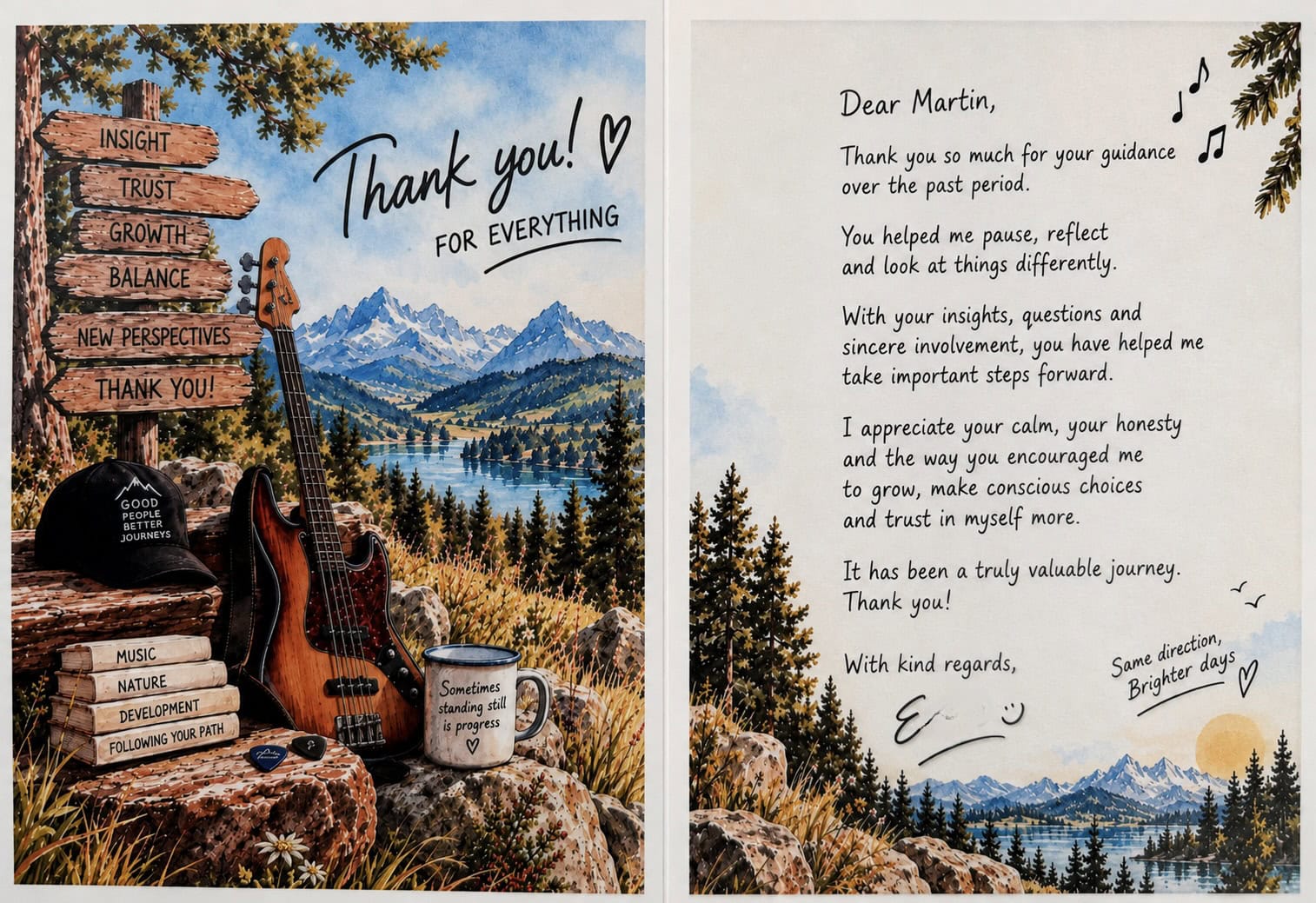
The best ‘Return on Investment’ comes in the form of gifts like these a client recently gave me… Thank you, dear clients, for the trust you have placed in me over these past 35 years, allowing me to help you move forward on your journey. And I am still there for anyone I can support. Martin
Martin
Working together—within your own team or organization?
COLLABORATION CAN BE EVEN BETTER AND MORE EFFECTIVE!
HOW? By building Teamspirit—but what is it, and how do you do it?
Find out here: https://martinthoolen.com/en/hoe-teamspirit-tot-magische-resultaten-leidt/ Or:
Listen to the podcast here: https://martinthoolen.com/en/podcasts/
Something currently useful for your team? https://martinthoolen.com/en/service/teamcoaching/
During my travels around the world, I’ve drawn inspiration from unexpected encounters with people and nature that I love sharing with you. Sometimes you have to go far away to get closer to the heart of things. This time: ‘If Trees Could Speak’. It made it so clear to me how everything is interconnected, offering a new way of working and living. Just take a look...
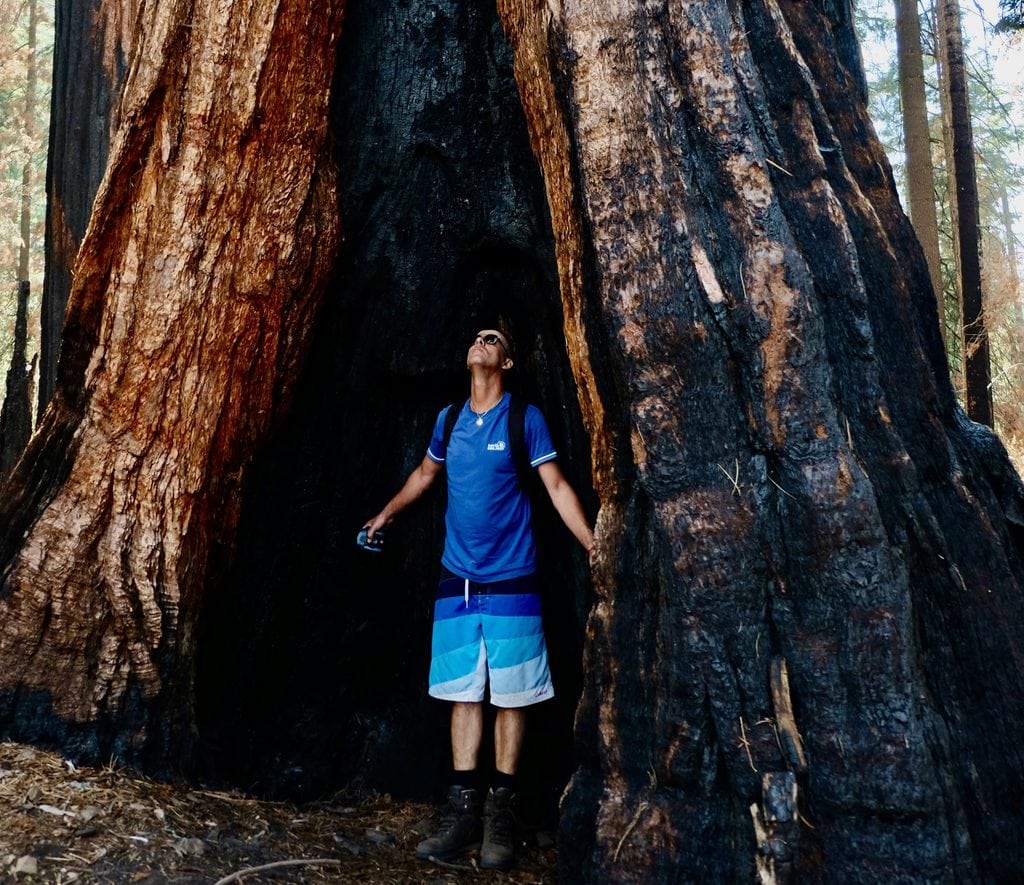
Some places and moments offer deeper insights than others. I experienced a moment of crystal-clear inspiration during a stay in California, USA, in 2014. Sitting silently admist the trees for a while, a valuable new connection came to life—one I hadn’t seen before. It made it so clear to me how everything is interconnected, offering a new way of working and living. Just take a look...
I found myself wanting to step into the tree’s skin—or rather, its bark. Imagining myself in that position, I wondered what I would have witnessed over all those days, months, and years if I had eyes. The sun, the rain, people sitting against me with genuine care, or walking past carelessly as if I were just another plant. Perhaps someone even carved a declaration of love into my bark. Or saw my brothers and sisters being cut down—and felt the pain of that. Or embraced me.
What would I have heard if I had ears? The wind, raindrops on my leaves and branches, the birds that spent time with me as their host and home. The people around me—some kind, others arguing. Would they realize someone was listening in? And if there were always something watching and listening, how would they behave?
People being friendly or arguing around me as a tree. Imagine if, instead of just being listened to neutrally and without judgment, I—as a tree—were to speak up and point out the consequences of their ‘own’ behavior: Would they listen to me, learn something, and change their actions to something better or more pleasant? What might I, as a tree, have heard from my ancestors about how my surroundings have changed over the centuries? Who even notices me anymore, now that more and more buildings have sprung up around me? What would I say to people today about how they treat us trees?
This is not a story about sustainability.
It is about a deeper connection—one we have become cut off from—that nature offers us if we open ourselves to it.
Everything is connected. The forms simply differ; the senses and languages of all beings—trees included—vary, which is why we do not always understand one another. The same applies to the people you live or work with.
“Everything is connected with everything"

What would happen if we stepped into each other’s skins more often, even if only for a while? Just as I did with the tree. If we asked questions to better understand one another, engaged in dialogue, and learned a little about each other’s histories, fostering greater understanding of one another’s choices and behavior? At work, with colleagues, clients, and suppliers. At home, with partners, children, family, and neighbors. With one another, across differences in skin color, culture, or religion. What would happen then?
For at our core, we are all the same—equal human beings, each with our own unique school of life and work. From the perspective of universal consciousness (or spirit), there is no difference; in essence, we are all connected.
Try stepping into someone else’s shoes—or the perspective of something else—for longer periods; ask questions and listen with neutral curiosity. I predict you will grow closer and collaborate and live together much more ‘in spirit,’ with all the benefits that brings.
Want to know more about deep listening and finding common ground instead of polarization? Take a look here: Article on Deep Listening: https://martinthoolen.com/en/hoe-diep-luisteren-je-werkelijk-harmonie-brengt/
I wish you wonderful journeys of discovery and a sense of closeness as you get under each other's skin.
Warmly, Martin
Want to see more short inspirations from around the world? Take a look here: https://martinthoolen.com/en/inspiratie/?_categorie_knoppen=wereldinspiraties
© 2026: Martin Thoolen
#wereldinspiraties #worldinspirations #reisverhalenmartinthoolen #travelstoriesmartinthoolen #spirit #synchroniciteit #synchronicity #firstnations #persoonlijkinspirerendleiderschap #persoonlijkleiderschap #leadership #leadershipdevelopment #personalleadership #leiderschap #spiritueelleiderschap #spiritedleadership #executivecoaching #leiderschap #leiderschapsontwikkeling #teamcoaching #collectiefleiderschap #professionalcoaching #coaching #businesscoaching #psychologyofselves #voicedialogue #egozielspirit #egosoulspirit #healer #healing #shaman #awarenessatwork #martinthoolen
"If Everything Comes and Goes, Why Hold on to It?"
© 2026: Martin Thoolen
Executives, Professors, Secretaries-Generals, as well as Physicians, PhDs, Advocates Generals, Managers, Assistent-Managers and Captains.
Working at a national or international level.
As a Business Psychologist and Senior Trainer/Coach, I have had the privilege of guiding literally thousands of leaders over the past 35 years. Across a wide range of sectors: Professional Services, Healthcare, Education, Industry, Logistics, Central Government, Provincial and Municipal Authorities, and more.
What do they have in common?
They are Human.
And, that they bear a great responsibility.
Working and living at the helm of teams and organizations can be demanding at times, raising questions such as:
These are just a few of the many questions leaders bring to me.
Sometimes, a neutral, experienced and professional sparring partner provides you with new perspectives and enables you to make considered, well-balanced choices.
Would you like to have a mutual discovery meeting—entirely without any obligation or cost?
You can.
Call, email, or message me, and you will receive a response within one day.
+31- 6 – 1562 0111
Want to know a bit more about me first?
Take a look at: https://martinthoolen.com/en/over-martin/
Maybe we’ll meet up later. Beste Regards, Martin
In Alphen aan de Rijn, The Netherlands (close to The Hague)— where I currently live and work from—I established a special connection with Harold Koelemij, chairman of the ‘Help Differently’ Foundation.
I was, and remain, deeply moved by the wonderful work he and his volunteers do in Alphen aan de Rijn. Providing care for children and adults in the neighborhood who are not in the current postion to spend much. Such as financial advice, giving children a day out, helping lonely elderly people, and much more. Read more about the foundation here: https://www.helpanders.nl/over-ons/
To strengthen collaboration among the volunteers, I have developed a custom-made workshop titled ‘Help Each Other,’ which I will be facilitating on a pro bono basis this coming September 17th.
INTERESTED PARTIES WELCOME
Anyone wishing to learn more about the activities of Foundation ‘Help Anders’ or interested in the (free!) workshop is welcome to contact the foundation at [email protected]You are more than welcome to attend!
More information can be found here: https://ap.lc/DyAdM
Date: Thursday, September 17, 2026
Time: 7:00 PM – 9:00 PM
Location: Briljantstraat 64A, 2403 AE Alphen aan den Rijn, The Netherlands.
Warm regards, and perhaps I’ll see you there! Martin
Life and death are often mentioned in the same breath. How can you view this and use it to enrich your life and work? How can you grow into a person and professional who lives and works with greater satisfaction and positive energy, and where your talents truly come into their own?
Here is a perspective...
Death is nothing more than the destruction of a form. Birth is nothing more than the emergence of a form. Both are part of the timeless cycle of creation.
But what, then, is life? What do we work and live for, and what is its meaning?
If you view life linearly, it has only a beginning and an end point: ‘that’s it’. Life would then simply be over—or shattered—in an instant. But is that really the case?
If you view life cyclically, it is an infinite flow that constantly changes form—like the ebb and flow of the tides, the seasons, or the birth and death of a day. From a linear perspective, life ends definitively with the destruction of the form: the death of a leaf on a tree, of a day when the sun sets, or of the body when you die.
Yet that is a limited perspective—comparable to the old idea that the Earth was flat. That image provided a useful frame of reference for topography and travel at the time, but it was only part of the truth. It was only when our perception expanded that we discovered the Earth is round: the flat Earth turned out to be a two-dimensional projection of a three-dimensional reality.
It is the same with life. Beyond linear thinking, life is something cyclical that constantly returns in a different form. Most of us, with our limited perception, cannot yet see this—but that does not mean it does not exist.
If you take this line of reasoning further, the same applies to the body as to the flat earth: it is a temporary, three-dimensional projection from a higher dimension that exists beyond time and space. Upon death, this form is cast off, and life—divested of the body—simply continues. It is possible that each dimension is, in turn, a projection from an even higher dimension, extending infinitely. In any case, it is heartening that science and human consciousness are capable of perceiving ever more, allowing our perspective to keep expanding. And above all: life simply goes on, albeit in a different form.
The death of a form creates new space and experiences from which to learn through newly born forms. Sometimes, we let go of the old to give ourselves the chance to experience or create something new—whether it involves a thought, a belief, a job, a project, a day, a year, a friend, or a family member. So: thank you, death… and birth…
Death certainly does not mean the end of life. How hopeful that is! You are not ‘finished’ when you die—in fact, life has always existed: before your birth, after your birth, and after your death. It has never gone away.
This raises the question: where, or for what purpose, do you live and work? Or perhaps more accurately: *how* do you live and work, right now?
I am convinced that life here is simply a temporary school—a place of painful, traumatic, and joyful experiences intended for the growth of the soul. Our body is merely a temporary vehicle for gaining earthly experiences and learning from them as human beings and as souls.
From the cradle to the grave, we gain deeply felt experiences in work and life that can teach us to become better people. Alternatively, we may fail to learn from them, stagnate in our development, or even become worse people. You reap what you sow.
The beauty of it is that an infinite life gives us the chance to realize this, time and again. Every year, every day, every hour, and every minute offers an opportunity to grow in *how* you live and work—allowing you to give shape to your talents with greater contentment, positive energy and inner peace.
Do you want to discover how to make your work and life more meaningful, and what might be holding you back?
Then take a look at this book: Spirited Personal Leadership
To life!
Martin
Took a little break. Wonderful! Really recharged. And now...?
Before you know it, you've forgotten all about your vacation. Right?
Your calendar and inbox are overflowing, deadlines are looming, and before you know it, you're back in the thick of it.
Would you like to avoid the trap of excessive workload this time and continue working with enjoyment and positive energy?
Coming from a background of 35 years’ experience in training and coaching, including in the areas of workload, sustainable employability, and reintegration, I'd like to share my best tips with you.
Back to work: from relaxed to overloaded?
And boom! You're feeling worn out again after just three weeks. So you wonder:
Where has my energy gone? How can I keep that candle burning?
Everything is energy. You are energy, too. Your body is just a temporary energy container. The more energy you expend, the more you will need to replenish it. Just like a car. It can't run without fuel, and without regular maintenance it’ll rust stuck.
"Everything is energy"
So you simply must refuel every now and then. You usually do that on vacation. By not thinking, but simply being. Your energy is completely replenished without you even realizing it.
Back at work, all that often fades into the background. Work is like running a marathon and vacations are the finish line. Exhausted, you go on another vacation to recover, only to do the same thing all over again. And sometimes you work until you are ready to collapse. And your "thinking cap” is always on. Like how you worry about your work in the evenings.
You can maintain a healthy work-life balance on three levels:
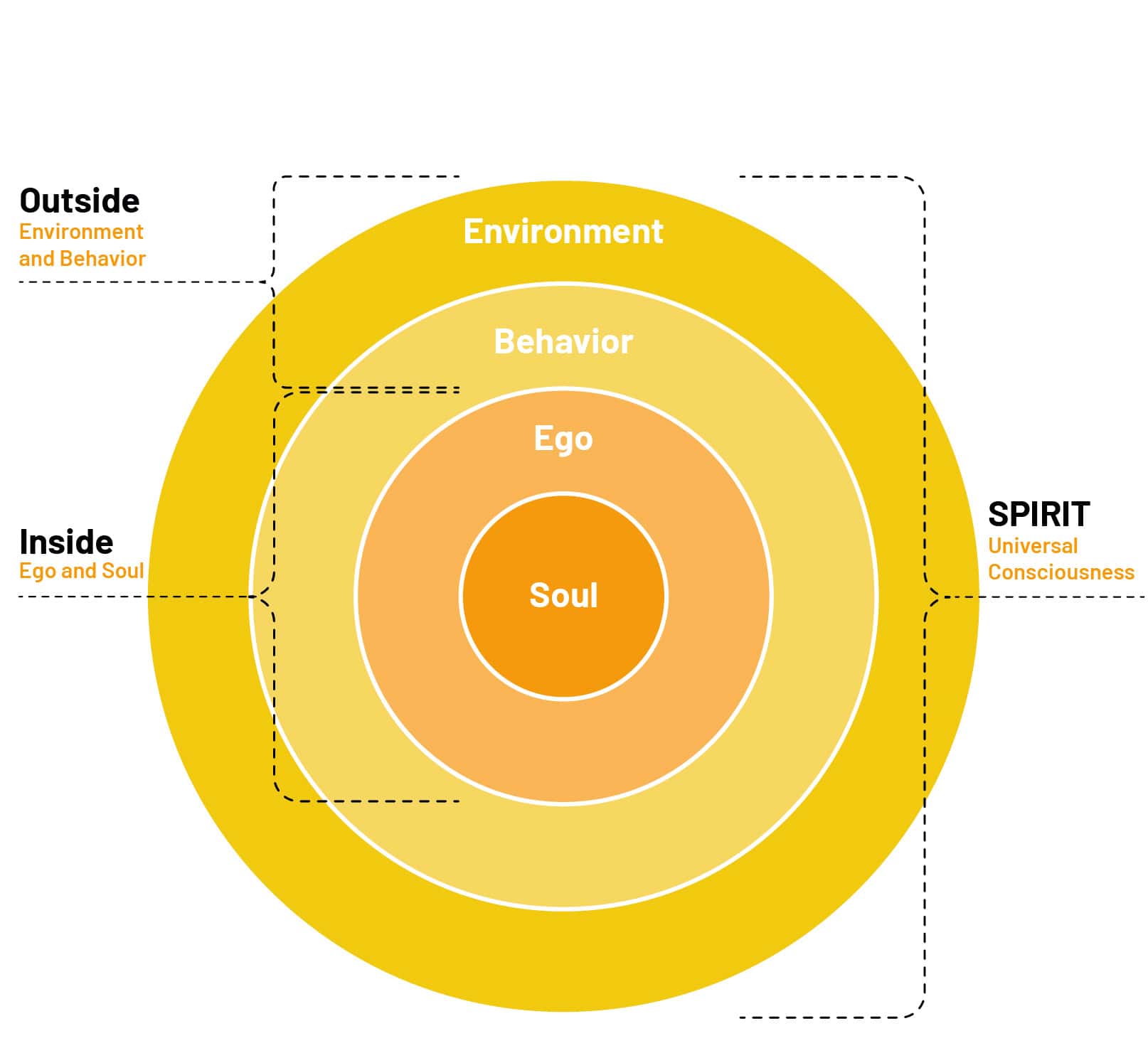
From © 2022: Spirited Personal Leadership (Martin Thoolen): Spirited Personal Leadership Model TM
You'll find relief if you work more effectively and efficiently by managing time and stress. Try the following tips:
TIP 1: SET THE RIGHT PRIORITIES
Before you do something you feel obliged ask yourself the following four questions and maybe try to do things differently for a change:
1. Why does this need to be done?
2. Why me?
3. Why now?
4. Why like this?
TIP 2: PLAN BREAKTIME AND TAKE REGULAR BREAKS
Incorporate at least 20% of free time into your schedule. Spontaneous events and regular breaks ensure your schedule doesn't blow up. Make sure you take a short break every 1.5 hours and actually step away from your workstation. This distance often provides more breathing room and relaxation. You'll recharge without even realizing it.
TIP 3: DELEGATE
Ask someone else to take over a task. Don't be afraid to challenge someone if the work is becoming too much for you.
TIP 4: LISTEN AND ACT IN ACCORDANCE WITH YOUR BODY
Your body is a brilliant stress scanner. It accurately tells you whether you're heading towards stress or burnout: chronic fatigue, worrying, poor sleep, physical complaints and much more. The question isn't so much whether your body registers it, but rather whether you recognize your body's signals. Once you do, dare to set healthy boundaries for what your body demands of you.
"Your body is a brilliant stress scanner"
TIP 5: EXERCISE
Give yourself a healthy kick in the butt. Research shows that exercise reduces the negative effects of stress and contributes to a positive mood and better mental health. A half-hour walk every day or doing yoga or going to the gym—it all helps.
One way to look at your ego is to imagine you're a bus with various ego passengers, some of whom may decide to take the wheel, unbeknownst to you. When pleaser the pleaser takes over, you will try to do everything you can to meet someone else’s needs. When the pusher When the pusher is driving, feel compelled doing everything you you’re doing without allowing yourself a break. The perfectionist generates top quality work and beauty in form, but can also waste a lot of extra time, which can leave you in a crunch.
These three ego powerhouses (pleaser, pusher, and perfectionist) are favorites with employers because what they do for them is significant and valuable, in return for reward and appreciation. There's nothing wrong with that, but these three Ps are also the biggest causes of exhaustion.
TIP 6: DOSE YOUR INNER PLEASER, PUSHER, AND PERFECTIONIST
Dose the three ego passengers by allowing their opposites at the wheel.
1. Dare to set healthy boundaries and, therefore, be seen as unfriendly.
2. Take more time to relax during the day to recharge.
3. Let go of your perfectionism and, if necessary, ask someone else to monitor the quality of your work.
The foundation of your vital energy is your inspiration. Because when you do what inspires you, you are connected to a much larger source of inexhaustible energy: consciousness or spirit. Sometimes you can tweak the external aspects (with your behavior, time, and stress management), but a structural energy leak remains. The nagging feeling of not being completely comfortable in your work continues.
Sometimes you work on fertile ground for a while, sometimes on arid, or even toxic soil. When arid, you lack challenge and inspiration. When toxic, work gets under your skin, and it keeps you occupied at night more than you'd like. It’s important to be aware of this, because any systems and relationships that don't allow space for the existence and the unique expression of the soul, imprison your soul and can make your body seriously ill.
“All systems and relationships that do not give space to the existence and the unique expression of the soul, imprison the soul and can make your body seriously ill”.
Therefore, it is sensible to occasionally examine and recalibrate your own career and your current performance.
TIP 7: RE-CALIBRATE YOUR INSPIRED CAREER
Ask yourself the following questions and answer sincerely from your heart and soul:
1. Am I currently doing what I want to and can do?
2. Am I my best self here?
3. Am I happy with my work?
4. Do I get energy from my work?
5. What do my dreams tell me? [insert link] (New tips for this in the blog: https://martinthoolen.com/en/nieuwe-loopbaanstap-gebruik-je-dromen/)
6. What would I do differently if my spirit had more breathing room?
When your soul is speaking, you often recognize it by the following words that may pop into your mind: actually, preferably, really, truly, essentially. Sneak up on what's wérkelijk truly going on inside you and dare to make new, well-considered choices. Because sometimes it's cowardly to leave, but sometimes it's cowardly to stay (Peter Delahay).
"Because sometimes it's cowardly to leave, but sometimes it's cowardly to stay."
(Peter Delahay)
What can you do to continue working with vitality after your vacation?
Don't wait until the next vacation to recharge.
Build in recharge moments, every week and every day, so you can continue working with pleasure, energy, and focus.
Want to know more about what you can do? Check out coaching for burnout and sustainable employability here: https://martinthoolen.com/en/service/coaching-vitaliteit-duurzame-inzetbaarheid/
I wish you an energetic and positive remainder of your working year.
© 2026: Martin Thoolen
#werkdruk #burnout #overspannen #stressmanagement #timemanagment #duurzameinzetbaarheid #re-integratie #leadership #leadershipdevelopment #leiderschap #spiritueelleiderschap #spiritedleadership #executivecoaching #leiderschap #leiderschapsontwikkeling #loopbaanontwikkeling #loopbaancoaching #teamcoaching #collectiefleiderschap #professionalcoaching #coaching #businesscoaching #psychologyofselves #voicedialogue #persoonlijkinspirerendleiderschap #persoonlijkleiderschap
How is it that personal leadership—and the leadership of others—often remainsmany times unchanged, despite costly personal development and management training or coaching?
This is a question that has occupied my mind for decades.
I vividly recall working in the 1990s for a renowned training and consultancy firm staffed by psychologists, when this very question arose.
Why did participants in communication or management training courses so often revert to their old behaviors after just a few weeks—or sometimes even days? A colleague literally said: “That’s just the way people are, their personality; you can’t change that.”
The answer intrigued me.
Hmm, is that really true?* I wondered.
Is there something else—beyond behavior and skills—that shapes our actions, our choices, and our (personal) leadership? Is there something we all share—transcending culture and religion—that determines all our behaviors and choices? Something universal?
Driven by that question, I spent years as a spiritual explorer searching for answers. After years of experience with thousands of clients, along with studies, training courses, seminars, conferences, visits to (spiritual) gurus, and numerous journeys to indigenous peoples around the world, things began to fall into place.
What emerged was remarkable.
On the one hand, it didn't seem like anything new, yet I had never before encountered the ‘interplay of three these hidden forces’ quite the way it was revealed to me—literally—in a dream during the summer of 2007.
While in Sweden, I woke up around 3:00 a.m. and felt a compelling need to write down what I had dreamt. In that dream, it suddenly became clear to me that everything takes on a different color and meaning depending on whether the ‘ego’ holds sway, the ‘soul’ reigns, or consciousness/‘spirit’ exerts a dominant influence. Everything would change as a result: your view of the world, your values and norms, your thoughts, your feelings, your language, your choices, and your behavior. Truly everything!
I was euphoric about this revelation, which sparked a thought: what would it be like to use these three concepts as a starting point for a new consciousness model? I woke up buzzing with energy and went downstairs to jot down these insights. This later became the core philosophy reflected in my book: *Spirited Personal Leadership* – for working more effectively, meaningful living, and creating a better world.
DO YOU WANT TO KNOW HOW THESE THREE HIDDEN FORCES SHAPE YOUR BEHAVIOR?
And how you can experience greater joy, vitality, and a sense of purpose at work and living?
THEN DOWNLOAD A FREE PDF SAMPLE (containing one-third of the content) HERE, or BUY THE BOOK HERE: https://martinthoolen.com/en/publicaties/
I hope it brings you great clarity, inspiration, and enjoyment.
Warm regards, Martin